
Transmission Flush vs Drain and Fill: How Much Fluid Is Actually Needed? (2026 Guide)
Updated: May 15
Most passenger cars require 4 to 6 quarts of transmission fluid for a standard service (drain and fill), though total system capacity can reach 12 to 16 quarts.
If you are planning a transmission service, the first question you’ll ask is: "How many quarts of fluid do I need to buy?"
The answer depends entirely on whether you choose a Drain and Fill or a Full Machine Flush. One requires a few quarts; the other requires a small mountain of them.
The "Hidden" Fluid Problem
Most drivers don't realize that their transmission pan only holds about 30% to 50% of the vehicle's total fluid. The rest is trapped inside the torque converter, cooler lines, and valve body.
If your car’s gears hesitate or shift roughly, or if you’re planning a weekend maintenance session, knowing the exact amount of transmission fluid your vehicle needs can save you from costly repairs. Transmission fluid plays a crucial role in keeping your car’s transmission running smoothly, especially with the increasing complexity of 2026 models. This guide will help you understand how much transmission fluid your car requires, what’s new in 2026, and how to avoid common mistakes when servicing your transmission.

Understanding Transmission Fluid Capacity
Transmission fluid capacity refers to the total amount of fluid your vehicle’s transmission system holds. However, when you perform a DIY fluid change, you usually only replace part of this fluid. This difference is important to understand to avoid overfilling or underfilling your transmission.
Total System Capacity vs. Service Fill
Total System Capacity: The full amount of fluid needed to completely fill the transmission, including the torque converter and cooler lines.
Service Fill: The amount of fluid you need when draining and refilling the transmission pan during routine maintenance.
For example, a car with a total system capacity of 12 quarts might only need 5 to 7 quarts for a standard drain-and-fill service.
1. The Drain and Fill (Standard Service)
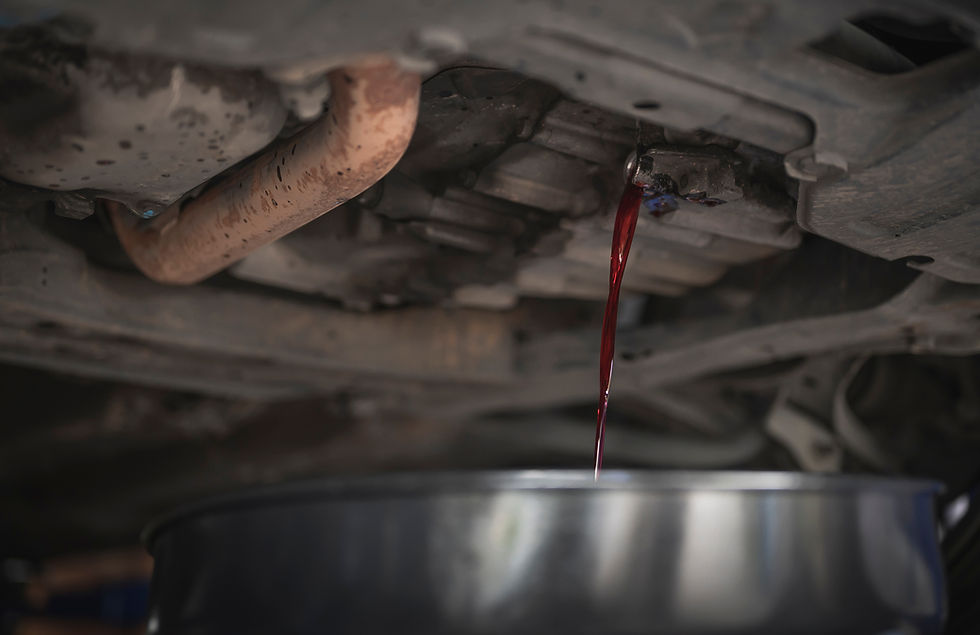
This is the most common DIY and dealership service. The technician pulls the drain plug, lets the fluid gravity-drain, and refills it.
Fluid Needed: 4 to 7 Quarts (depending on vehicle size).
What it does: It refreshes the additive package of your fluid but leaves a significant amount of old, dirty fluid behind.
Best for: Vehicles with regular maintenance history or high-mileage cars where a forceful flush might dislodge debris.
2. The Transmission Flush (Machine Service)
A flush uses a specialized machine to exchange the old fluid for new. It "pushes" the old fluid out of the torque converter and cooler lines.
Fluid Needed: 12 to 20+ Quarts.
Why so much? To ensure 100% of the old fluid is gone, the machine typically runs 2–4 extra quarts through the system to "rinse" the internal components.
Best for: Newer vehicles or those following a strict manufacturer-recommended flush interval.
Comparison Table: Quarts Needed
Vehicle Category | Drain & Fill (Quarts) | Machine Flush (Quarts) |
Compact/Sedan (e.g., Corolla, Civic) | 3 – 4.5 | 10 – 12 |
Mid-Size SUV (e.g., Explorer, RAV4) | 5 – 7 | 12 – 16 |
Full-Size Truck (e.g., Silverado, F-150) | 6 – 9 | 16 – 22 |
Which One Should You Choose?
Choose a Drain and Fill if:
You have not changed your fluid in over 100,000 miles (160,000 km).
Your fluid is dark but doesn't smell "burnt."
You are on a budget but want to extend your transmission's life.
Choose a Flush if:
You are within the manufacturer’s recommended mileage (usually every 45,000–60,000 miles).
You want a "total reset" of your transmission fluid quality.
Your vehicle is used for heavy towing or frequent stop-and-go traffic in hot climates.
2026 Quick Reference Transmission Fluid Capacity Table
This table provides a quick overview but always check your vehicle’s manual for exact specifications.
What’s New in 2026 Transmission Fluids?
The Hybrid Factor
Many 2024 to 2026 hybrid models, such as those from Toyota and Honda, use electronic continuously variable transmissions (e-CVTs). These transmissions require less fluid than traditional automatics but need specialized fluids with dielectric properties, often called "e-fluids." Using the wrong fluid can cause serious damage, so always verify the fluid type before servicing.
Ultra-Low Viscosity (ULV) Fluids
Modern transmissions with 8, 9, or 10 speeds often use ULV fluids. These fluids are thinner and expand more when hot, which means checking fluid levels requires more precision. Overfilling or underfilling can lead to poor shifting performance or transmission damage.
Sealed Transmissions
More manufacturers are removing dipsticks from transmissions, opting for sealed designs. If your car doesn’t have a dipstick, it likely has a fill-to-spill plug on the transmission case. This design requires careful fluid replacement to avoid overfilling.
Why You Only Need About 5 Quarts for a 12-Quart Car
One of the most common mistakes when changing transmission fluid is assuming you need to replace the entire system capacity. When you drain the transmission pan, about 60% of the fluid remains trapped inside the torque converter and cooler lines. This is called the Torque Converter Trap.
If your manual says 12 quarts total, buy about 6 quarts for a standard drain-and-fill.
If you plan to do a full flush, you will need the full 12 to 14 quarts.
This difference explains why many DIYers end up with leftover fluid or worse, overfill their transmission.
Signs Your Transmission Fluid is Failing
Recognizing when your transmission fluid is failing can prevent serious damage. Here are three common signs:
Hunting for Gears: If your car hesitates or shifts sporadically, the fluid’s viscosity may have broken down, reducing its ability to lubricate and transmit hydraulic pressure.
Shuddering: Feeling a vibration or shudder when accelerating or shifting gears often indicates fluid contamination or breakdown.
Burning Smell: Overheated or burnt fluid smells acrid and signals that the fluid has lost its protective qualities.
If you notice any of these symptoms, check your fluid level and condition immediately.
Tips for Checking and Changing Transmission Fluid in 2026 Cars
Consult Your Owner’s Manual: Always start with the manufacturer’s recommendations for fluid type and capacity.
Use the Correct Fluid: Using the wrong fluid, especially in hybrids or ULV transmissions, can cause damage.
Check Fluid Temperature: Some transmissions require fluid level checks at specific temperatures for accuracy.
Be Careful with Sealed Transmissions: If your car has no dipstick, follow the fill-to-spill procedure carefully.
Avoid Overfilling: Too much fluid can cause foaming and erratic shifting.
Final Thoughts: The Golden Rule for DIY Transmission Service
To wrap up your maintenance, there is one critical safety and technical warning every DIYer must respect: Patience is just as important as the fluid itself. While many guides tell you to check the fluid level while the engine is warm, the actual draining and refilling process should never be rushed while the system is scorching hot.
1. The Danger of "Hot" Service
Working on a transmission immediately after a long drive is a recipe for disaster.
Burn Risk: Transmission fluid operates at temperatures between 175°F and 220°F (80°C – 105°C). At these temperatures, a single splash can cause severe third-degree burns.
Component Integrity: Draining hot fluid from a hot aluminum transmission case and then immediately pouring in "room temperature" fluid can cause thermal shock. In extreme cases, this can lead to microscopic stress fractures in the valve body.
Settling Time: You must let the vehicle sit so the fluid can settle into the pan. This ensures that when you pull the plug, you are actually removing the maximum number of contaminants that have gravitated to the bottom.
The Fix: Park the car on a level surface and let it sit for at least 30 to 45 minutes. The system should be "warm to the touch," not "burning hot."
2. The "Air Pocket" Warning: Don't Just Drive Away
When you refill your transmission, you aren't just pouring liquid into a tank; you are filling a complex web of hydraulic veins and valves.
The Problem: Air pockets often get trapped in the upper galleries or the torque converter during a refill. If you shift into "Drive" and immediately hit the gas, the transmission pump might suck in air instead of fluid, causing the clutches to slip and burn instantly.
The "Slow Move" Protocol: After refilling to the "Cold" mark, start the engine and let it idle. With your foot firmly on the brake, slowly cycle through every gear (P -> R -> N -> D -> L) and hold each for 5 seconds. This "primes" the system.
The Initial Drive: When you first move the car, do it at a crawling pace. Do not "floor it." Allow the system to pick up the fluid and stabilize the pressure. Once the car moves smoothly without hesitation, take it for a 5-minute light drive and then re-check the level.
⚠️ A Final Warning to the DIY Community
Transmission work is rewarding but unforgiving.
Precision is King: Being "off" by even one quart (too high or too low) can cause foaming or starvation, both of which will destroy the unit.
Cleanliness: A single grain of sand falling into the open transmission port during a refill can clog a solenoid. Use a clean funnel every single time.
Consult the Authority: Specifications change yearly. Always refer to your vehicle manufacturer’s manual as the final authority on fluid type, capacity, and specific leveling procedures.
For more professional maintenance schedules and fluid safety tips, you can explore the comprehensive resources at the Car Care Council. Always remember that staying informed is the first step to a long-lasting vehicle.
Transmission Fluid FAQs (2026 Edition)
1. Can I use a "Multi-Vehicle" fluid in my Toyota or Nissan?
While many high-quality synthetic fluids are "multi-vehicle" rated, you must be careful. If your Toyota requires World Standard (WS) or Type T-IV, or if your Nissan requires NS-2/NS-3 CVT fluid, ensure the bottle explicitly lists those specs. Using a standard automatic fluid in a CVT transmission will cause immediate failure.
2. How much fluid do I need for a simple drain-and-fill?
For most popular sedans in Ghana (like the Toyota Camry, Honda Accord, or Hyundai Elantra), a standard service usually requires 4 to 5 quarts. Even though the manual might list a "Dry Fill" of 9+ quarts, much of that remains in the torque converter during a drain.
3. Should I change my fluid if it already smells burnt?
If the fluid is black and smells burnt, changing it can be risky. New fluid has high detergent properties that might wash away the friction material holding an old, worn transmission together. If you notice a burnt smell, consult a professional at Autolast before performing a flush.
4. Is it okay to check the fluid level while the engine is off?
No. For the most accurate reading on a dipstick-equipped vehicle, the engine should be running, and the fluid should be at operating temperature. Checking it while the engine is off will give you a "false high" reading because the fluid hasn't circulated through the system.
5. Why doesn't my car have a transmission dipstick?
Many modern vehicles (2018–2026) use "sealed" transmissions. These are designed to be checked via a check-plug underneath the car while the vehicle is level. If you don't see a dipstick, do not attempt to "guess" the level; this requires professional tools to avoid overfilling.
At Autolast, we believe in empowering you to maintain your vehicle—but your safety and the health of your engine come first. Take your time, stay cool, and drive safe.


Comments