
5 Signs Your Car Needs More Transmission Fluid
Updated: May 15
5 Signs Your Car Needs More Transmission Fluid (And How to Fix It)
Transmission fluid is the lifeblood of your vehicle’s gearbox. Unlike engine oil, which burns off over time, transmission fluid stays in a closed system. If your fluid is low, it almost always means you have a leak or a breach that needs immediate attention.
If you notice any of the following five signs, check your levels immediately to avoid a multi-thousand-dollar repair bill.
1. Slipping Gears
This is the most common symptom of low fluid. You may feel the engine "rev" or race during a gear change, but the car doesn't accelerate accordingly. It feels like the car is struggling to find the right gear or suddenly "pops" out of gear while driving.
The Cause: There isn't enough hydraulic pressure to engage the clutches that hold the gears in place.
2. Erratic or Rough Shifting
Does your car "lurch" or "clunk" when you shift from Park to Drive? Or perhaps there is a noticeable delay when you step on the gas before the car actually moves?
The Cause: Low fluid levels lead to inconsistent pressure within the valve body, causing the transmission to slam into gear rather than sliding smoothly.
3. Unusual Noises (Whining or Grinding)
If you hear a high-pitched whining sound that gets louder as you accelerate, your transmission pump is likely sucking in air along with the remaining fluid.
The Cause: Just like a straw at the bottom of an empty glass, the pump creates bubbles (aeration) when fluid is low. This lacks lubrication and can lead to metal-on-metal grinding.
4. Transmission Overheating
Transmission fluid isn't just for shifting; it's for cooling. If you see a "Transmission Temperature" warning light on your dashboard, or if you smell something sweet and "burnt" after a long drive, your fluid is likely too low to dissipate heat.
The Danger: Heat is the #1 killer of transmissions. Operating even 20° above normal temperature can cut the lifespan of your gearbox in half.
5. Delayed Engagement
When you shift into "Drive" or "Reverse," there should be an almost instant response. If you have to wait 2 or 3 seconds for the transmission to "catch" and start moving, your fluid levels are critically low.
How to Check and Top Up
Find the Dipstick: Most cars (with a dipstick) require the engine to be running and the fluid to be warm for an accurate reading.
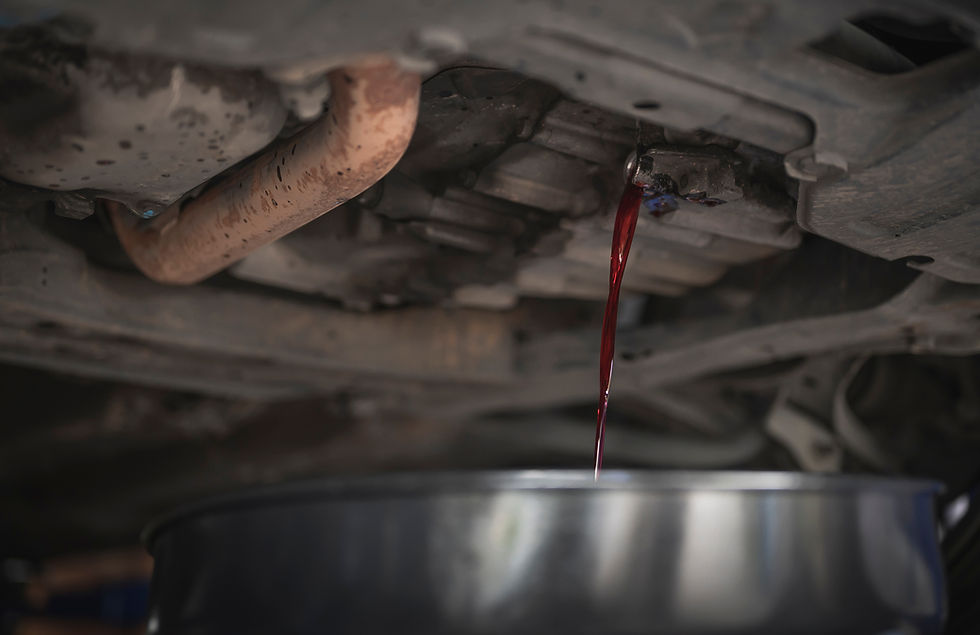
Color Check: Fresh fluid is bright red. If yours is dark brown or black, a "top-up" won't fix it—you need a full service.
The "Slow Fill": If you are low, add fluid in small increments (half a quart at a time). Overfilling is just as dangerous as underfilling because it causes the fluid to foam.
Important Note for Modern Vehicles
Many newer models (post-2015) are "Sealed Units" and do not have a dipstick under the hood. If you experience these signs and cannot find a dipstick, do not wait. You will need a technician to check the level via the "fill-to-spill" plug underneath the vehicle.
Final Warning: If you see a red or brown puddle under your car in your driveway, you have a leak. Topping up the fluid is only a temporary fix; the leak must be sealed to prevent total transmission failure.
Safety Reminder: Always remind your readers to consult their owner's manual before attempting to add fluid, as using the wrong type (e.g., putting CVT fluid in a standard Automatic) can cause instant damage.
Drivers can stop by Autolast Ghana for a quick fluid level check and high-quality brands like 77 Lubricants.


Comments